Katahdin Sheep, a year in the life.
What are Katahdin Hair Sheep and how do I raise them?
We get this question quite often. Did you know that wool sheep are crosses that are man-made, based on selective breeding to increase the wool retention or kink in the wool? In the wild, no hand of God comes down onto the mountains and shears the wild sheep. So, hair sheep, closely related to wild sheep, lose (or sheds) their wool at the end of winter. Katahdin’s are one of the several breeds of hair sheep bred only for meat. With the down turn of wool for textile manufacturing, it can cost more to shear then the wool is worth. Katahdin’s have short hair during the summer and a nice woolly coat in the winter. This makes them very suited for hot summers and cold winters. An interesting fact is the Katahdin breed was also man-made by crossing several breeds together. According to Wikipedia, a farmer named Michael Piel crossed African Hair Sheep with a wide variety of breeds. American Tunis, Cheviot, Hampshire Down, Southdown, Suffolk, and other English Down breeds where all used. He began his cross-breeding in 1957 and by the 1970, a flock of about 120 breeding ewes was selected. At this point, all the other breeds had been discarded except the Suffolk and he took what he had and began breeding the 120 ewes with a Wiltshire Horn, the only naturally-molting English Sheep. After Michael’s death, his wife took up the task of breeding out unwanted characteristics to include horns, lower prolificacy and reduced ease of handling. This was accomplished in Maine, in view of Mt Katahdin where they derive their name.
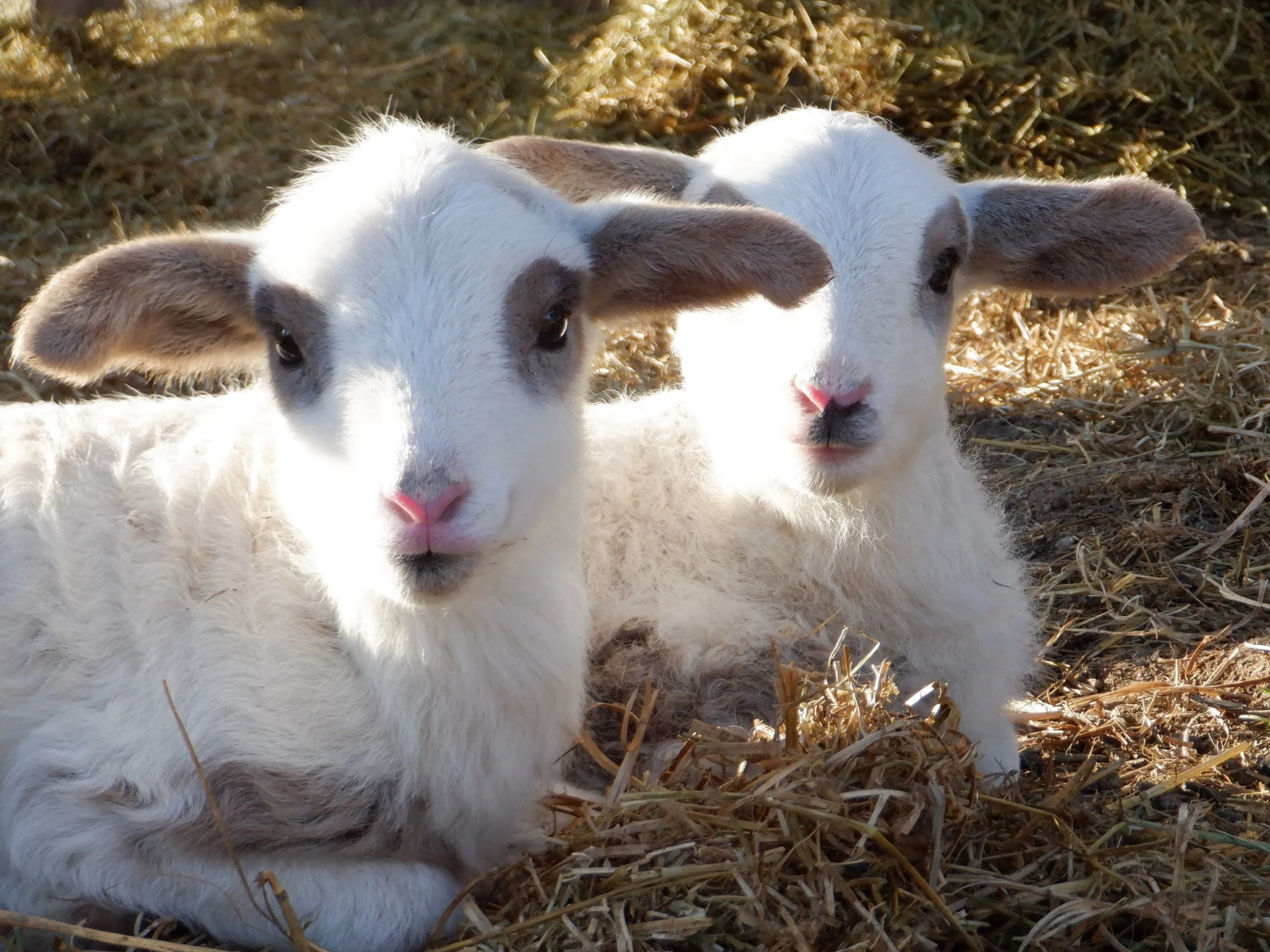
Born in March of 2021, to a Ewe we called Cookie. These two affectionately became known as “Cookie’s Crumbles”!
Katahdin’s are already docile and calm sheep; the more you handle them, the easier they become. They generally lamb freely without assistance and exhibit excellent mothering capability. They are easy-care sheep and very suitable for pasture lambing situations. Katahdin’s are resilient in all types of weather conditions and more resistant to hoof rot and parasites than many sheep breeds. They are very prolific, and you can see three pregnancies in two years running ewes and rams together. We’ll talk more about this shortly.
These sheep produce a good flavored, lean carcass that’s milder in flavor than the wool lamb breeds. This is because there is less lanolin in hair sheep than wool breed, which is what most people described as the mutton taste. Grass-fed Katahdin lamb is incredibly tender and flavorful!
We manage our mob for twin births, however it’s not uncommon to produce triplets, or even quadruplets. Remember the prolific nature talked about above. Our ewes will take to task raising all the lambs themselves, they are great mothers, however we’ve found it’s best to supplement the lambs or pull a lamb or two and only leave her with twins for the best growth and development. After all, there is only so much milk to go around. We’ve been asked several times if you could milk a Katahdin, and although I’m sure you can, we’ve never tried other than to feed a lamb.
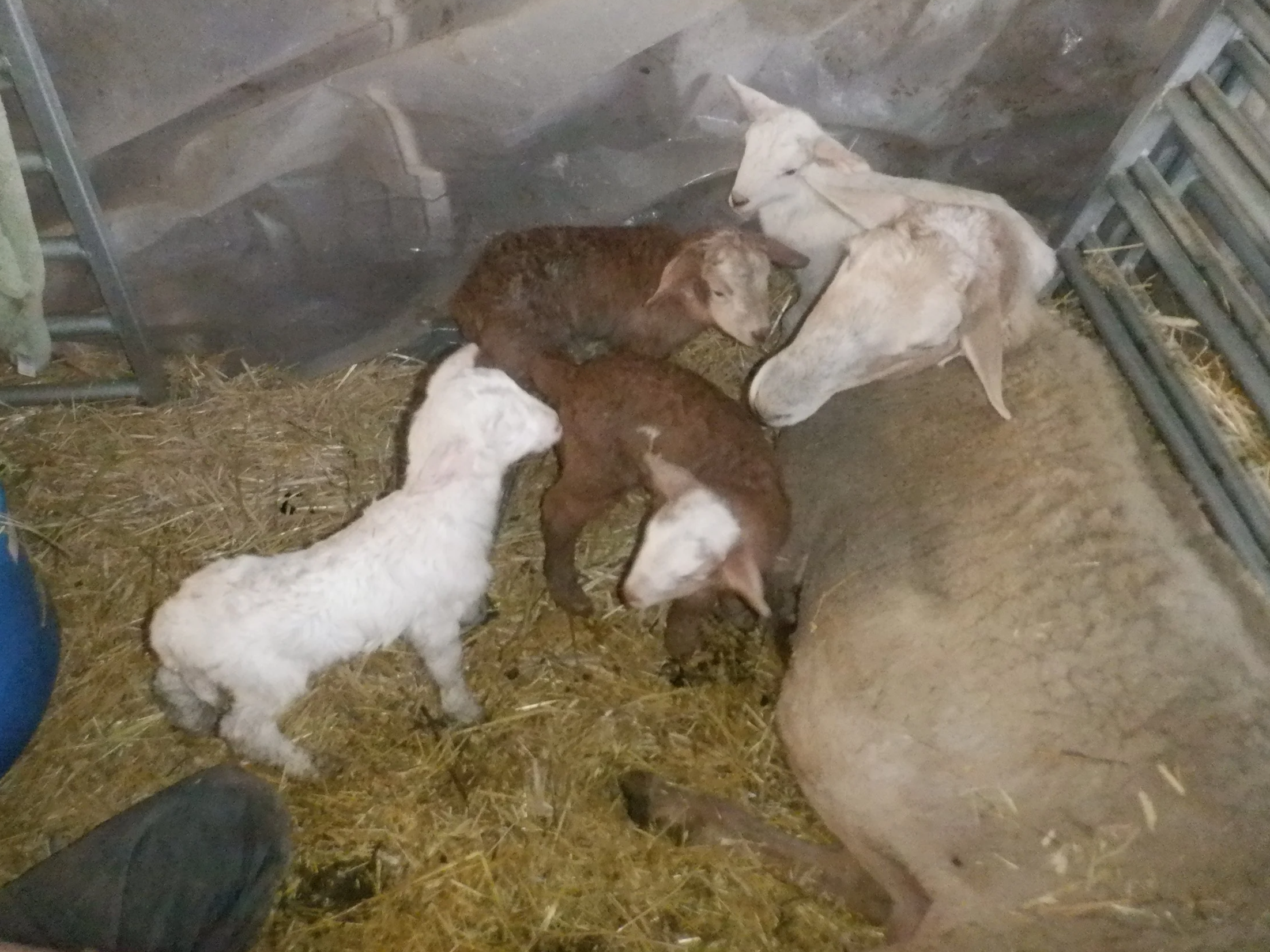
We manage our flock for twin births, but every once in awhile we end up with an overachiever!
So, how is our operation designed and what modification could you make depending on location? We prefer a grass feed diet, so our target is either pasture based or hay in the winter. We are located just about 48 degrees north latitude, which is further north than the state of Maine where the sheep originated. Most people think Maine is higher in Latitude since the USA maps are normally corrected to show a more level appearance. The very tip of Maine reaches into 47 degrees north while Washington State gets all the way up to 49 degrees north. So, our winters are long up here, requiring a few modifications to make this easier on us and the sheep.
If we started in January, since it’s the first month of the year, our sheep will be heavy with lambs and lambing will begin in late February. We would have just completed weights on the ewes to verify pregnancies in December. The first decision you’ll likely have needed to make the prior fall, is how you plan to market your animals. This will greatly depend on how you are able to sell them and the market that is open. Early breeding and January deliveries will provide an opportunity for 4H or Future Farmers of America (FFA), some early spring religious holidays will look for un-blemished ram lambs from the previous spring, “grow your own” folks will be looking for a lamb as the grass begins to grow in your climate and butcher in the fall after its dormant, or the people looking to increase their flock and/or bring in a new ram will be calling during the summer into the fall. About mid-January, we’ll begin to change their diet with addition of alfalfa to provide extra protein, this targets the last 30 days (approx..) of lamb growth. Parturition (lambing), will begin in mid to late February. We also supply the ewes their annual CDT shot to protect them and the lambs in the first weeks of life.
February is a time of anticipation as we transform the barn into a nursery. Over the years we have purchased 6-foot panels to develop individual 6x6 quarters (jugs) for new mothers and built different paddocks to begin the socialization of the lambs with the rest of the flock. In February, we are normally still covered in snow, so pasture birthing and our markets don’t align; but for others, this breed is well suited. So, we do it in the barn and a sacrificial field that will become a muddy mess by the time its all over. As each ewe gives birth, we move them to an individual jug to become acquainted. This could take 24 hours to a few days, but we want to make sure the lambs can find mom and she is allowing them to nurse. During this stay, each lamb is marked and weighed. Once this process is solid, next we’ll move 5 ewes together into what is called a “5 and 10”, or 5 ewes and 10 lambs. Again, this allows time for the lambs to adjust to a few new ewes and lambs, but still be able to find mom to nurse. Normally, by the time 5 more ewes have delivered, the 5 and 10 is functioning well. As the 5 and 10s build up, the next stop is a 10 and 20, combining two into one. Again, the lambs adjust to the new environment and numbers. This continues until all the lambs are born and migrated into 10 and 20’s. Our mob numbers sit around 60 head delivering a potential 120 lambs, if you have more, you could increase to a 20 and 40, but I’d assume you also know what you’re doing at that point and not reading this. The last step, as we are well into March at this point, is to open everything up and allow them access to the full barn and sacrificial field. It won’t be long until they are on their first pasture. Normally by lambing’s end, its time to start providing the lambs their first CDT and get another weight to see what growth is happening. This will happen each week until new weights have been documented on each lamb at approx. the same age, this helps us separate who will move on and be sold for what purpose. You wouldn’t want a low growth weight lamb sold for butcher; it wouldn’t get very big by winter. Once we have all the weights and growth numbers, these are collected and become some what of a report card on the mother, determining her value within the mob and what she is contributing to our end state.
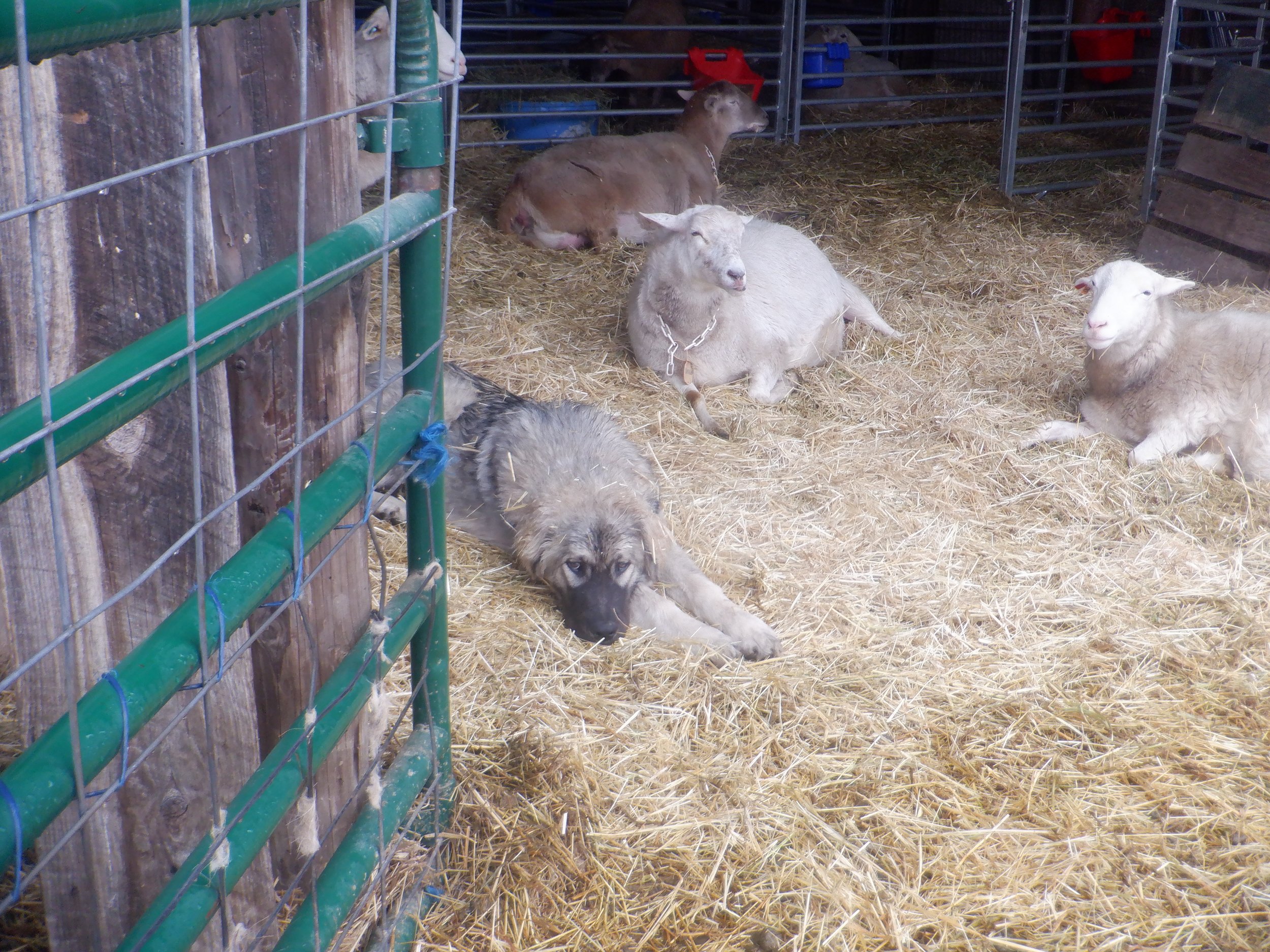
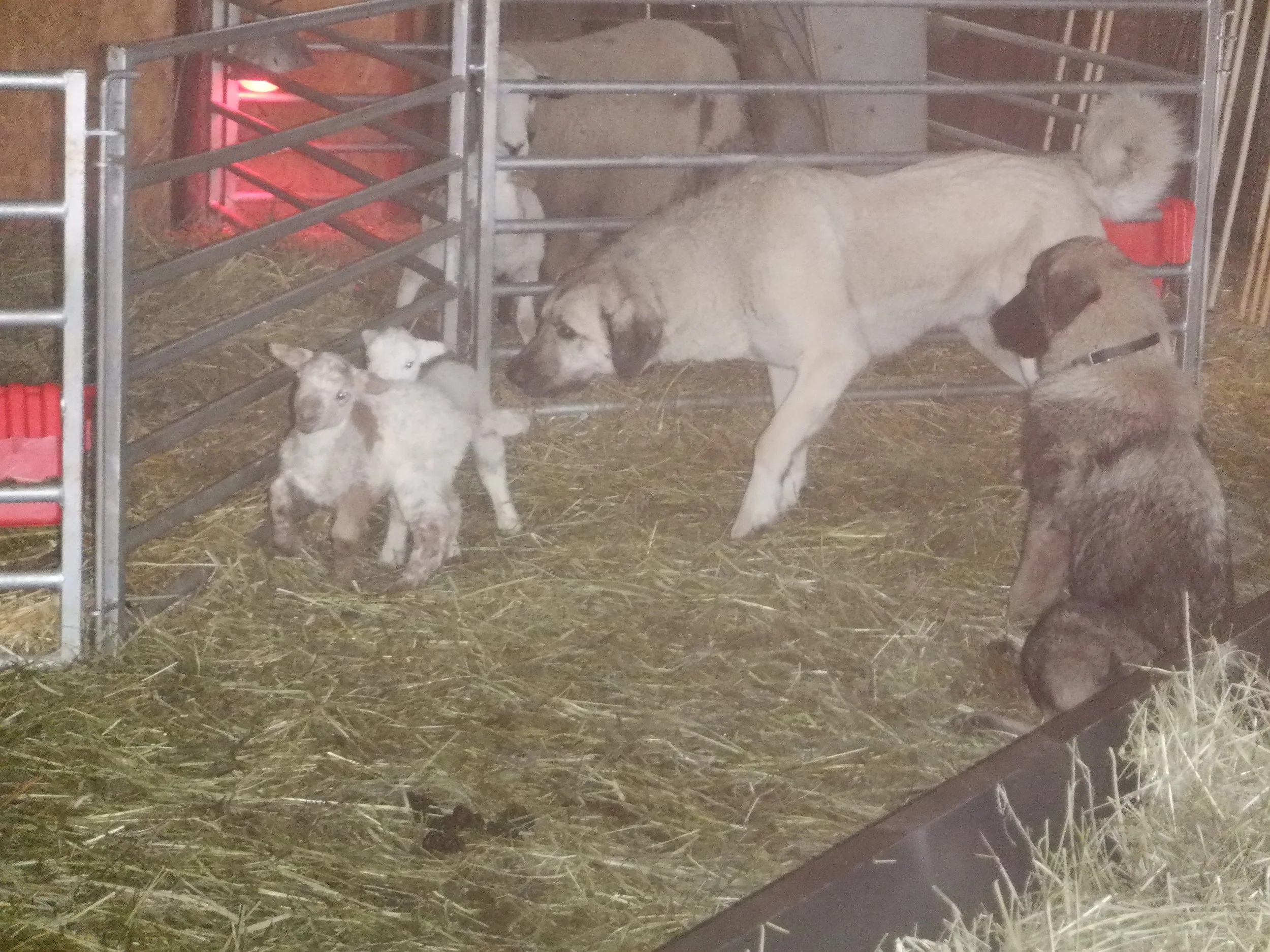
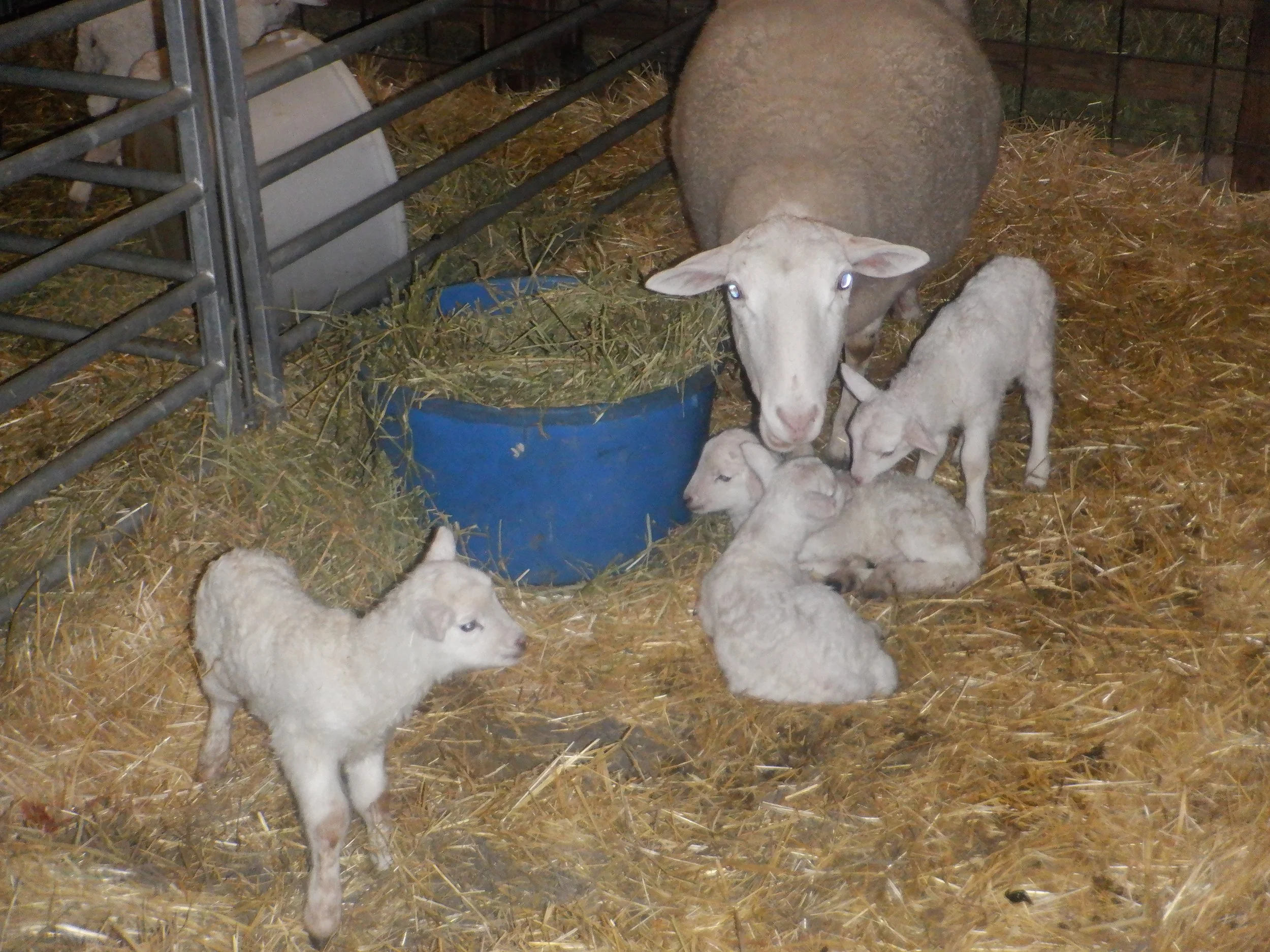
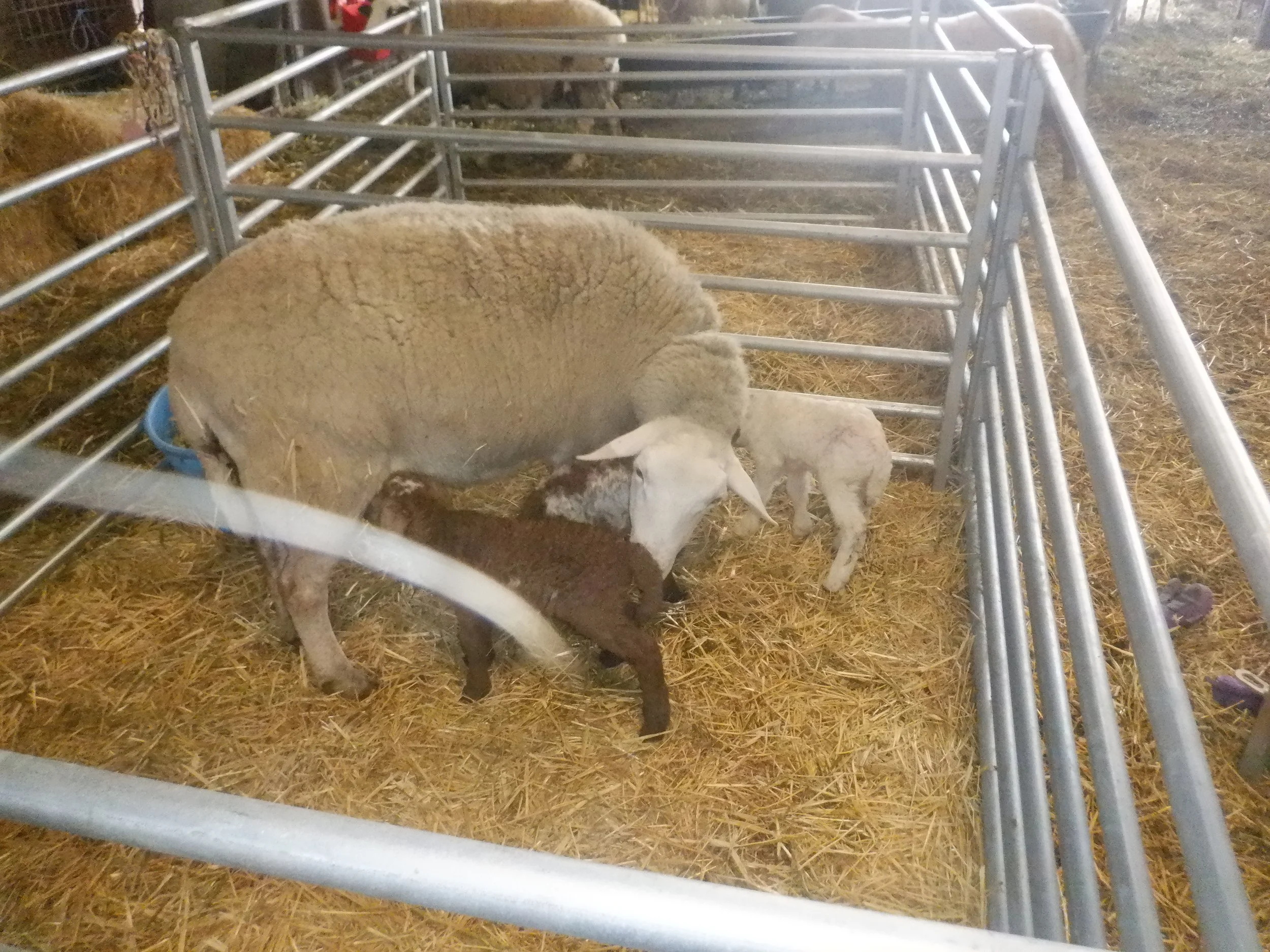
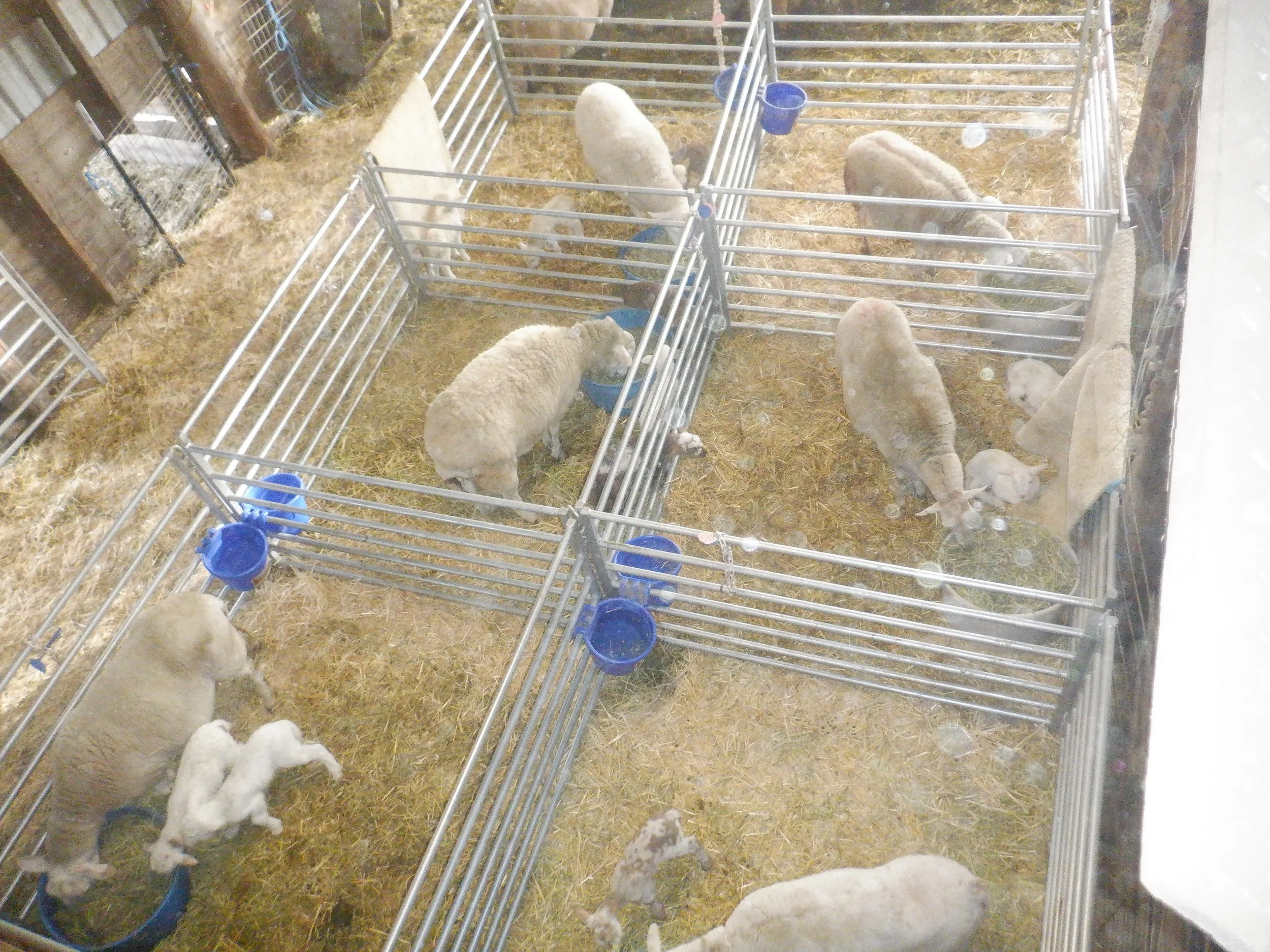
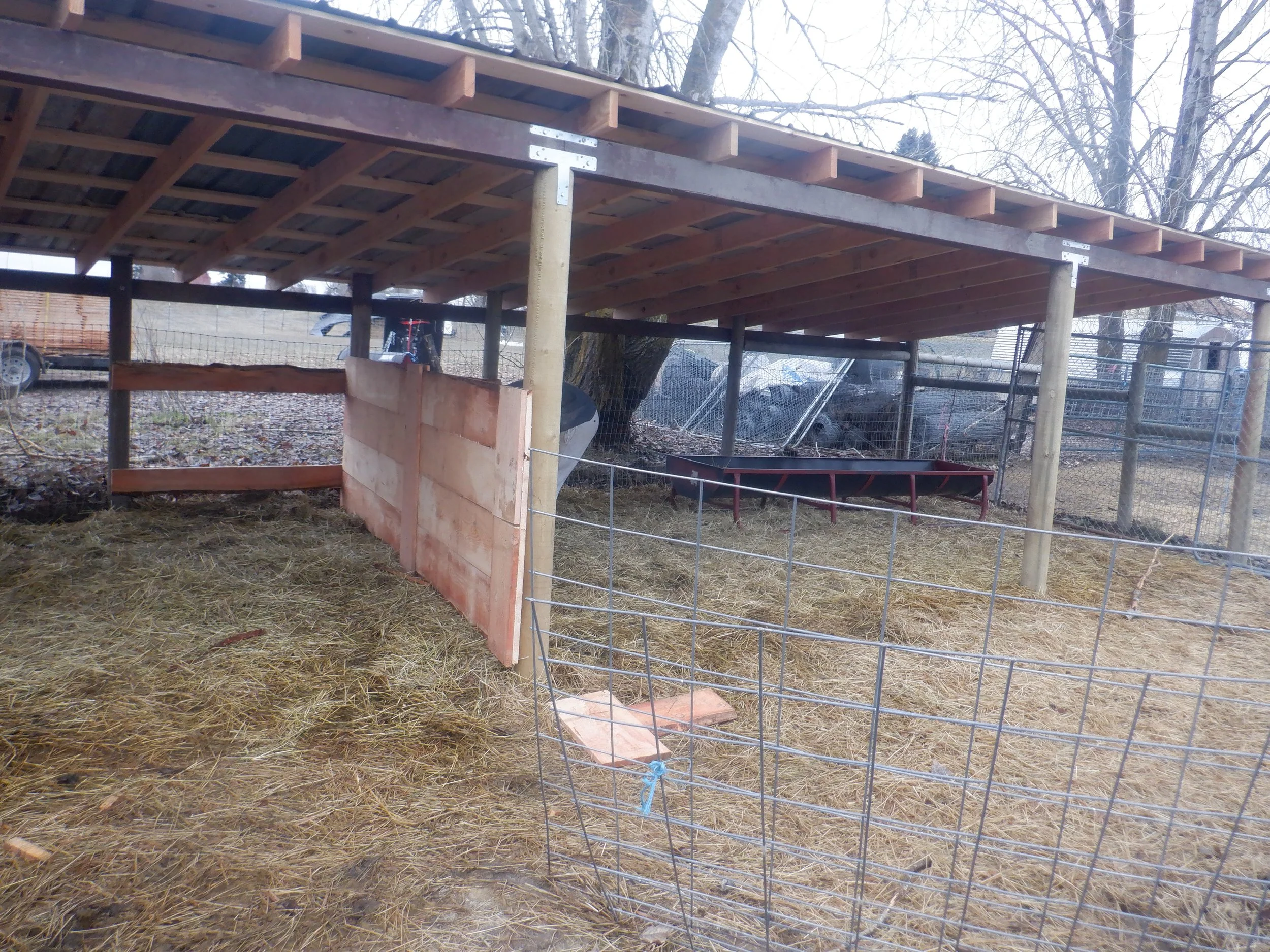
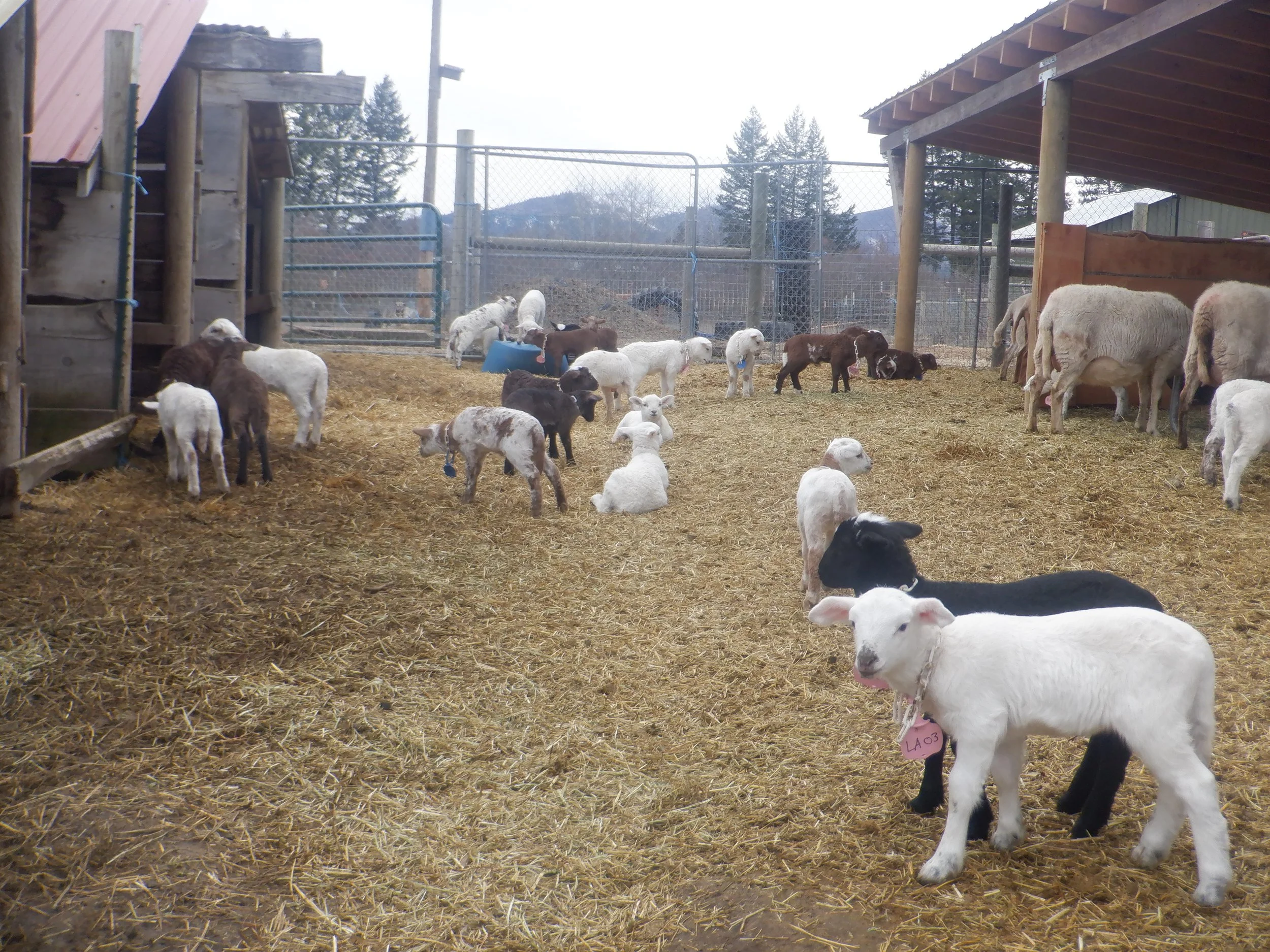
By the time April rolls around, we are busy birthing goat kids and the sheep are resting and playing in the barn and sacrificial field. We’ve removed all the jugs and other barriers to provide as much space as possible. Just outside of the sacrificial field is another paddock which on dry, warm spring days we can open to provide a space for them to run and play, get their first taste of pasture grass, while we clean the barn yard and do chores. Not too much at first, maybe an hour or so. Too much to fast can cause bloat or bad scours at the very least. The lambs will also get their last CDT at this time.
The month of May will begin our rotational grazing where we will move the mob up onto the higher paddocks (drier) and get them used to pasture grazing if they aren’t already. Once the grazing starts, it will avoid the barn and continue through the end of summer. We will also start to wean off thin mothers with a low body conditioning score (BCS) to make sure they can adjust back to pre-breeding weights. This is an opportunity for those who will use grain to grow the lambs on feed other than grass to bring about desired weights by fall. Also, you could do the same for the thin ewes, but we prefer to keep it just grass based, so you need the time to put up the weight. As time rolls along, we’ll also begin to wean the rest of the ewes who still had something to give. Once the mothers have dried up, you can bring any remaining lambs back together to graze the rest of summer. This month is also our target market time, so once we have weaned off lambs, its time to start moving them out. Lambs remaining on pasture will require a clean environment since they will be more susceptible to parasites then the mothers. This hopefully will end with the only lambs remaining being a few wethers to fatten for butcher and our replacement ewes. We have a separate rotation area for the rams and bucks we use, so any lambs that will remain intact will be moved there, they likely will not sell until the fall, prior to breeding. Other than collecting lamb weights again, we will keep the rotation going until the environment is to dry to grow any more, then it will be back onto hay getting ready for breeding season.
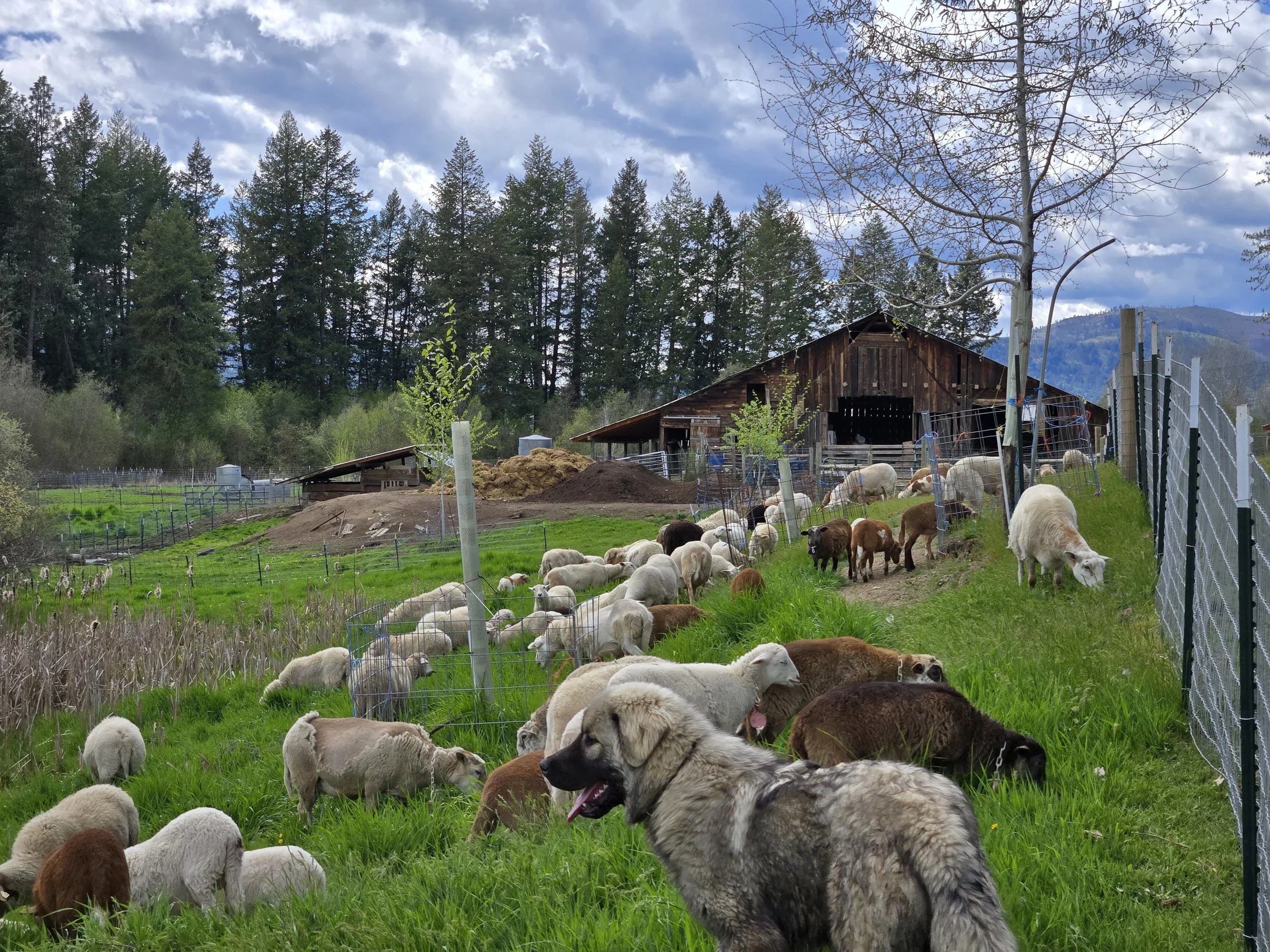
Cross Creek Koyla moving with the sheep into lower paddocks.
All our animals are fed on a grass diet; either pasture based or hay. We also provide loose minerals, selenium and iodine blocks because of the deficient soils in our area. Grass fed offers many health benefits you can look up, but must be fed correctly. If you have poor forage or are lacking minerals, this can cause your animals to be unthrifty with poor growth, all leading to poor taste and toughness. This even goes to the forage you buy for the winter months. I’m surprised by how many people don’t realize what good hay is or how to determine good hay. I myself didn’t understand it, but ran into a farmer who wanted you to know. It’s a great marketing strategy to educate your clients as to why they should continue to buy from you. He takes a sample and sends it to a lab to get nutrient results, which he sends to me for consideration. It has everything about the hay to include the protein and total digestibility. I do spend a little more on hay buying from him, however it proves its worth at the feed bunk every day. I have nearly zero residue left in the feed bunk when we come to feed again. So, my math is simple, if you paid $10 a bale and the sheep won’t eat half of it, then you are paying $15 a bale to get the same feed I am. You can find and purchase forage from farmers who spend the time and money to get a laboratory test result on the grass, this way you can make sure your animals are provided all the required nutrition. This also translates to optimum nutrition for your family.
If you like lamb, think about this for a minute: Most of the lamb sold in the USA is shipped in from Australia and New Zealand. Most of which is heavily grain fed, not ideal for ruminant health. We’ve even had folks challenge us about cheaper lamb they can find on Craigslist for $100 a head. Our warning is before you jump at the sale price, you might want some additional information. Lambs only live less than 12 months, the first 6 months they grow a tremendous amount, suffering nutritional deficiencies will set the framework for how they develop. You might want to ask more about how the forage is grown then how they are growing the lamb. Do they get forage tests and are they compensating for the deficiencies or just letting the lamb develop without it. By missing these items, you are sacrificing the quality, taste, tenderness and nutritional value of your purchase. Ask to visit the farm to determine how they are handling their lambs. Are the animals healthy and well cared for? Does the farmer seem to know a lot about sheep? Are they professionals or hobbyist?
Now, if you are purchasing breeding animals, let’s spend a little time on how we raise ours, so you have an idea of what to expect. We start with the very best animals we can. It is very difficult to change a sub-standard animal through breeding since each decision you make will take 365 days until you realize any benefit. We have found that it really takes 2 years to figure out what you did or didn’t do. If you kept a ram with a patch of retained wool, allowed him to breed year 1, it will take until the offspring is into year 3 to verify whether or not they have retained wool also, and they will always carry the genes. Using all the data we have collected (some referenced above), we index all our mother ewes each year to determine how well they are performing, across all points, based on our farm averages. This is normally pouring through a years’ worth of data and doing a lot of math. Once complete, we have a numerical value to determine if the animal is living up to our standards or not. This begins the foundation for building with the best materials. We also have a boiler plate list of confirmation, mothering, lambing and behavioral goals that our breeding stock must have, or they will be considered in a category we call Market Lamb. Now for us, this separates the cost of our market lamb’s vs the breeding lambs. It’s easy to provide an explanation of why a particular ewe lamb or ram lamb is more expensive than the one standing next to it. The client then can decide if the product it worth the explanation. And it never hurts to have data available to back up your claim. The work we have done to create breeding stock that carries as close to a guarantee as possible, has resulted in clients that come back year after year. We had a client once who had purchased four sheep before coming to our ranch, he then bought another four sheep from us. We got a call about a week later asking if there were any sheep left that would not be related to the first purchase. At the time we did and after asking why, he stated the difference between the two groups was night and day. The four he bought from us came when called, were easy to walk around and handle, while the others were crazy trying to hurt themselves and the other ewes trying to get away. Our breeding rams are selected in a very similar way; locating and purchasing only the best confirmation we can find. We source them from people who track what they are doing the same as us; this means long phone calls and traveling across the pacific northwest to find them. We allow them to breed but their first-year lambs will be evaluated and sold as market lambs because we know nothing about them at that point. We take all the evaluations, lamb confirmation, and data (again like a report card) and determine if they will continue in our breeding program for breeding stock. If they are really good, but not breeding stock level, we can still use them for market lamb production. Its like buying a race car, but not truly knowing what it can do until the first run down the track. In most cases, there is nothing wrong with our market lambs, they are just falling short on one of our standards. They are sold for less money, but for a reason. I remember walking around a client one year who was very against our ‘inflated cost’ for breeding stock (an additional $50). He was looking at two market ewes that came from mothers only delivering singles and was asking why he couldn’t breed them. He was trying to start a breeding program with cheap ewes. I told him “Yes, you can breed them, however they will likely only give you 100% return on investment each year, for an additional $50, you will likely end up with 200% return for the same input costs, and in three years you gain the potential of triplets”. He bought the market ewes anyhow, dead set on today’s price, not thinking about tomorrow/s cost.
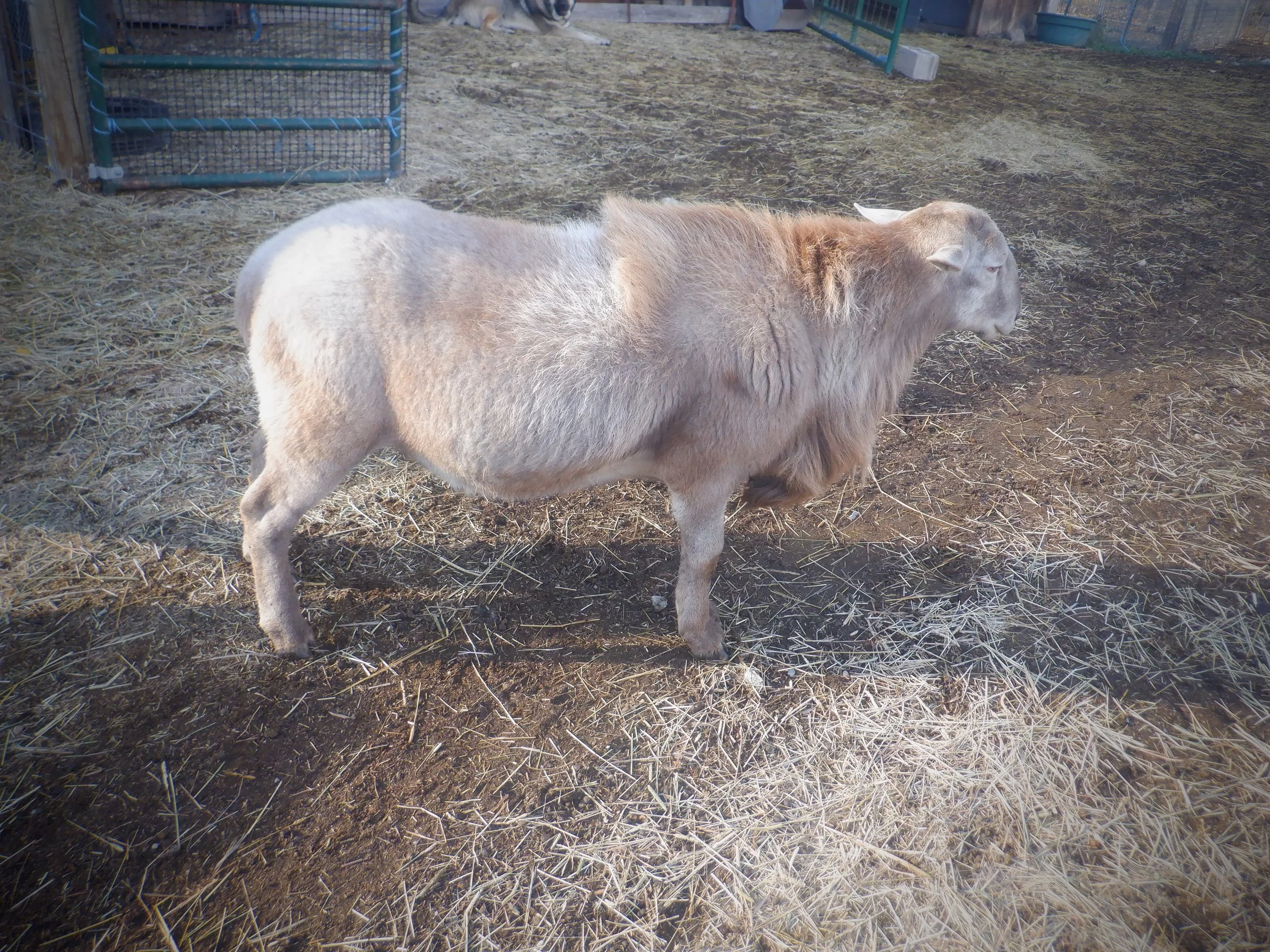
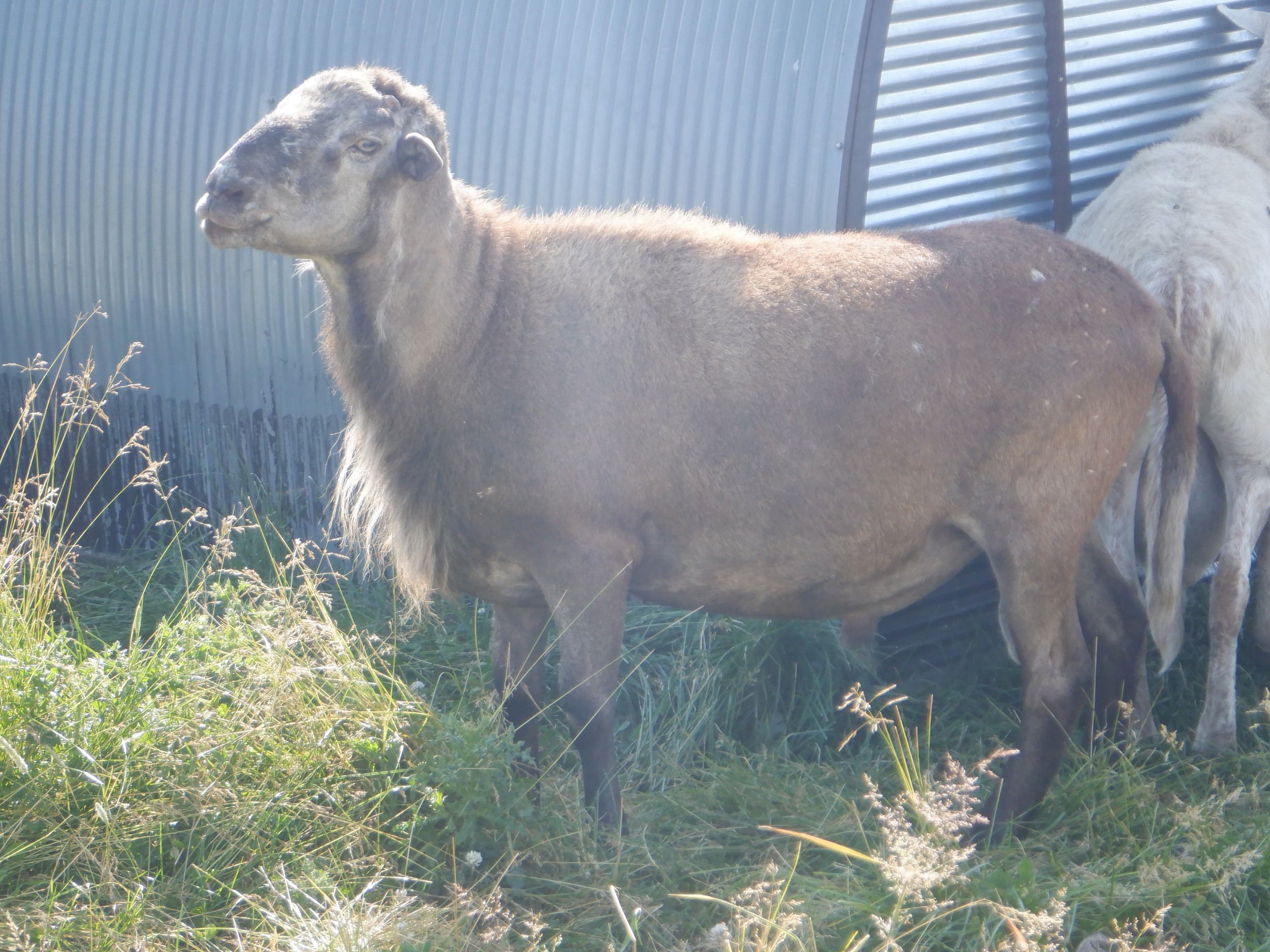
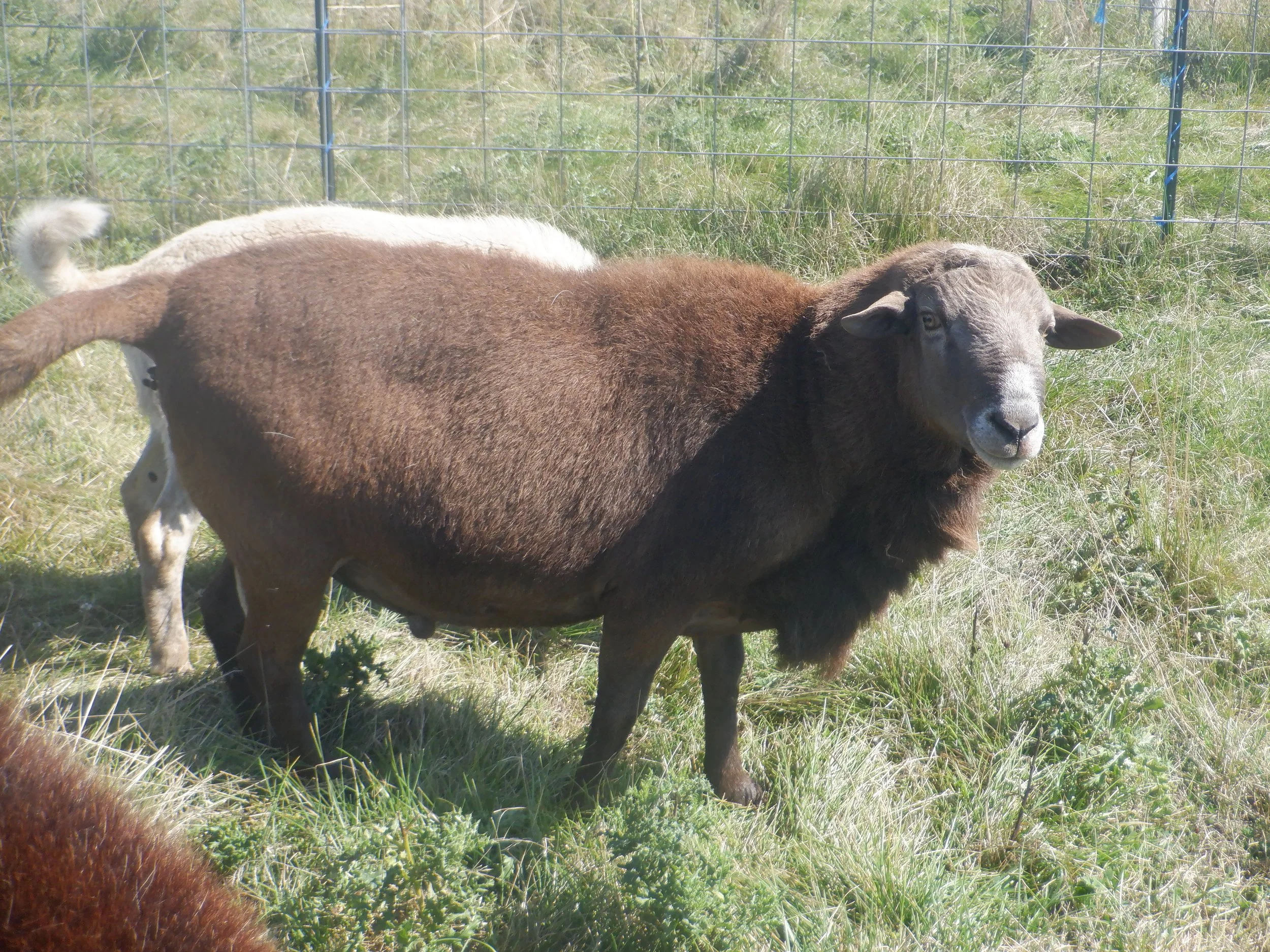
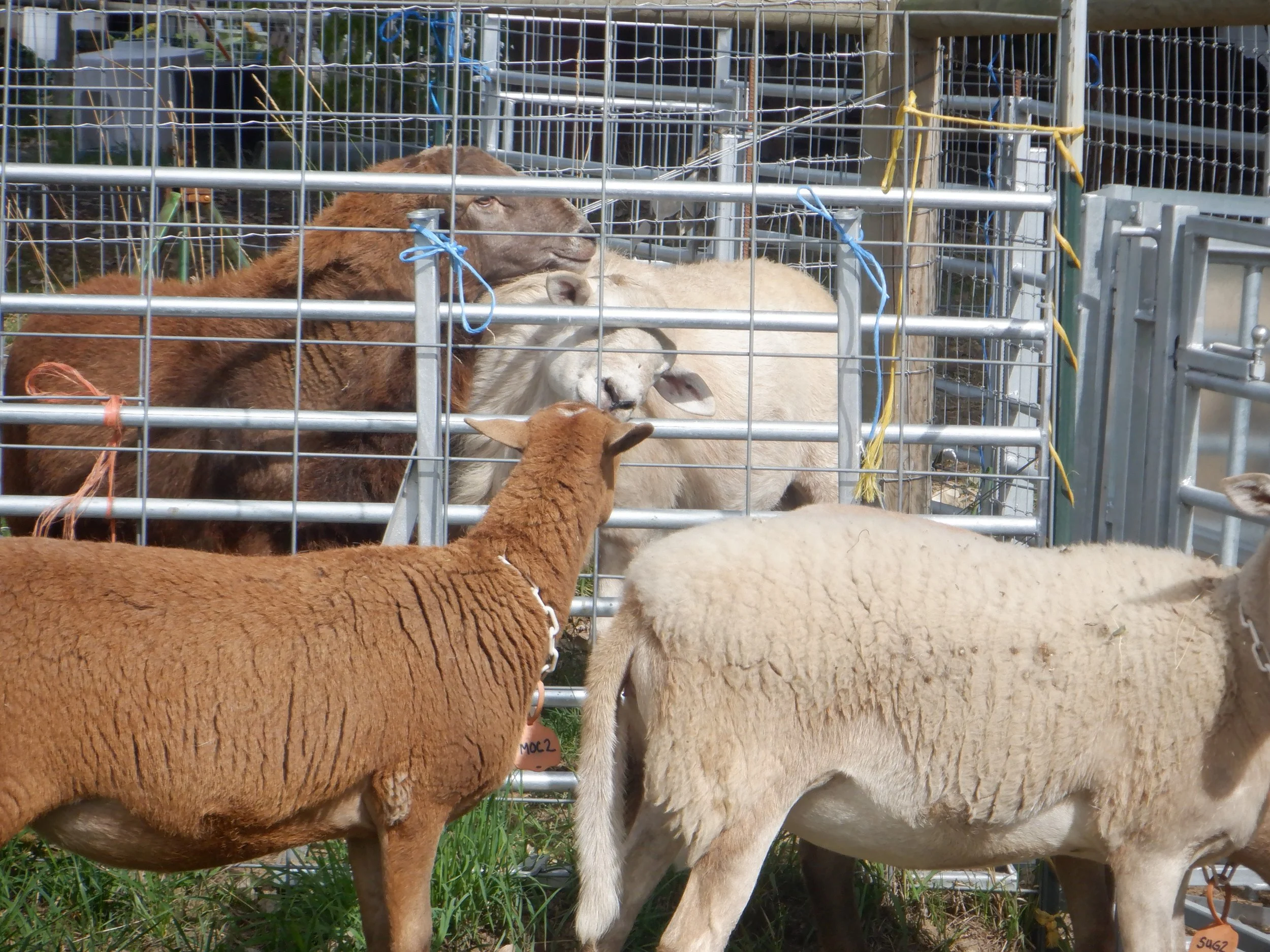
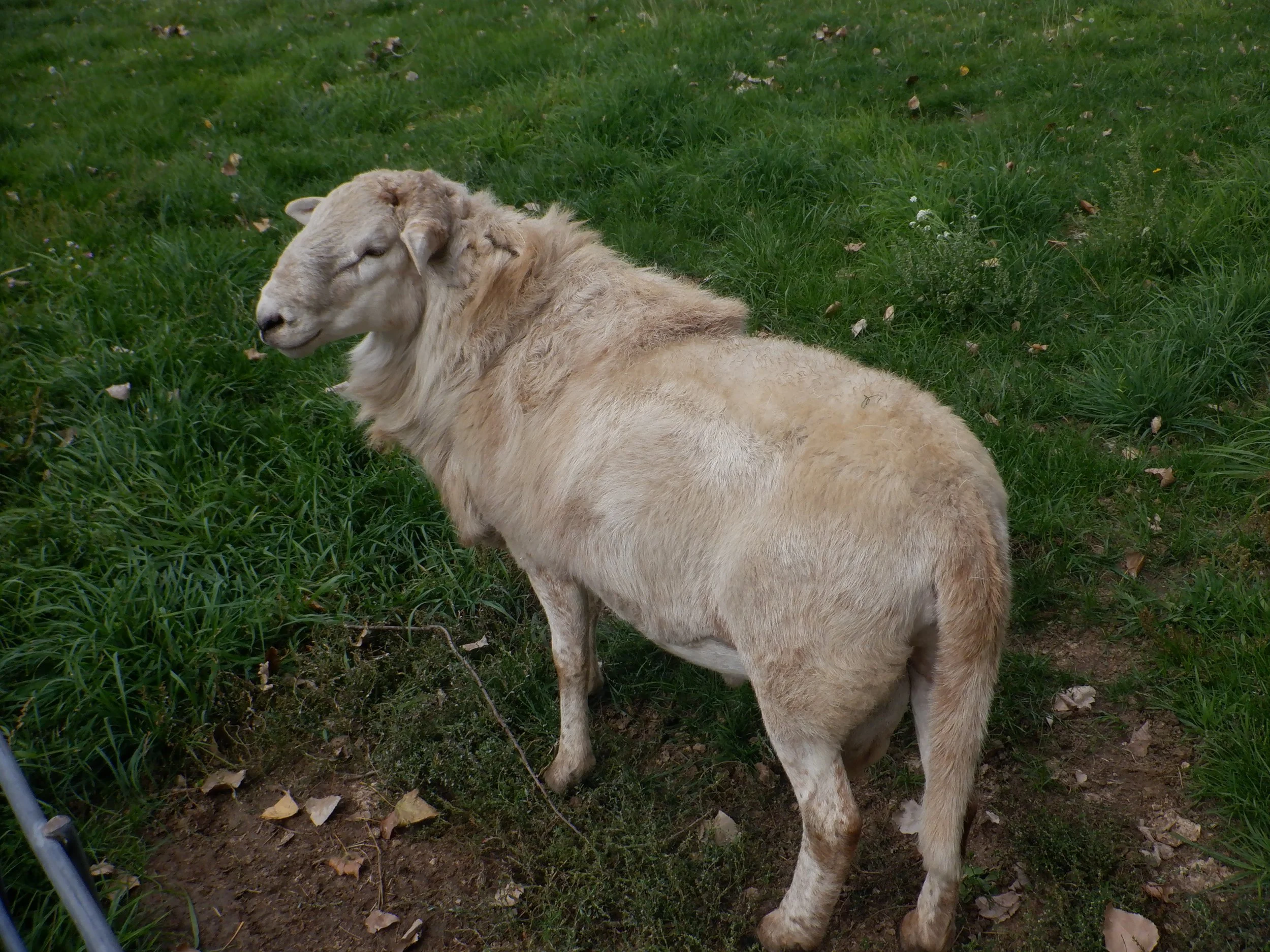
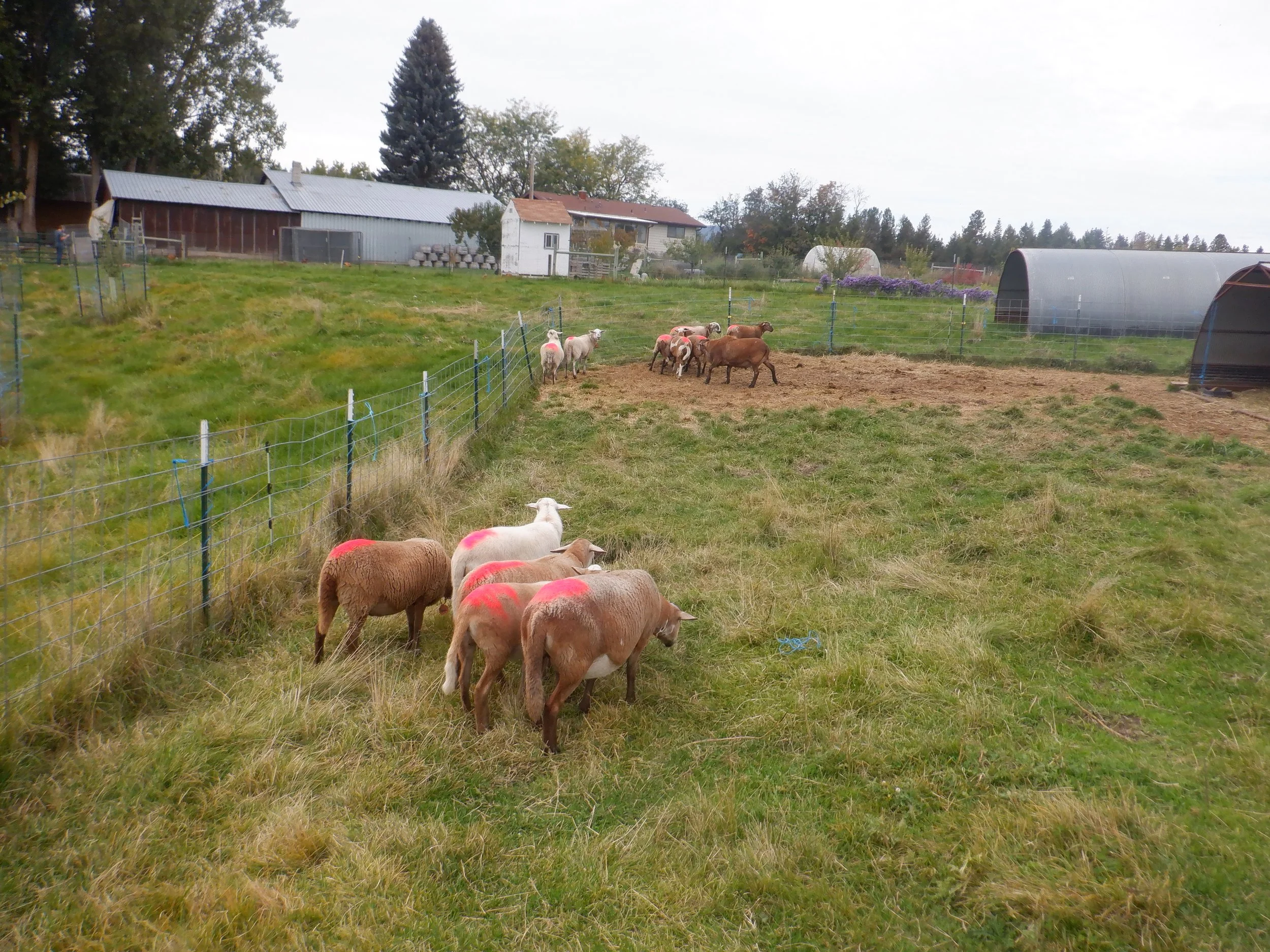
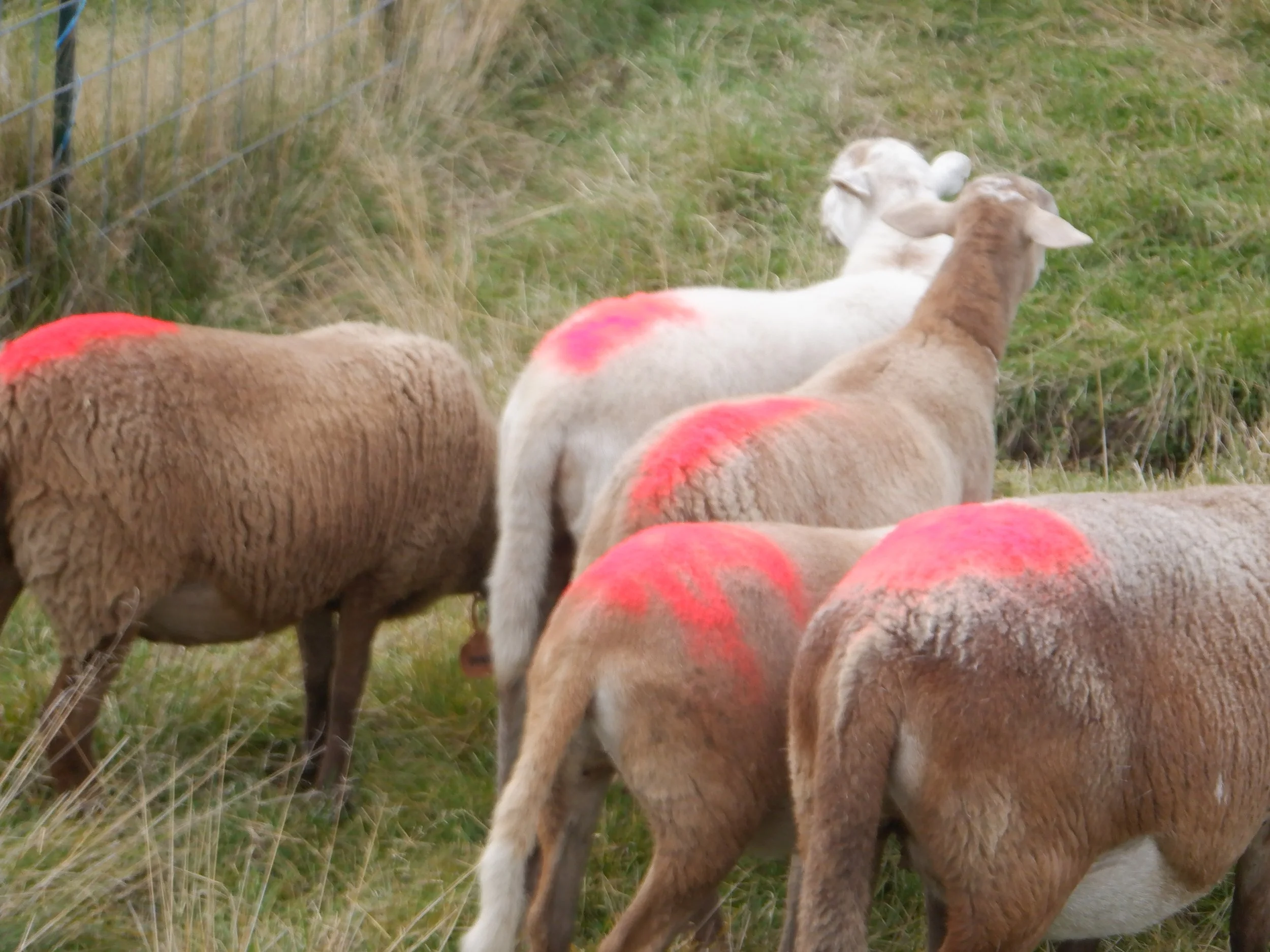
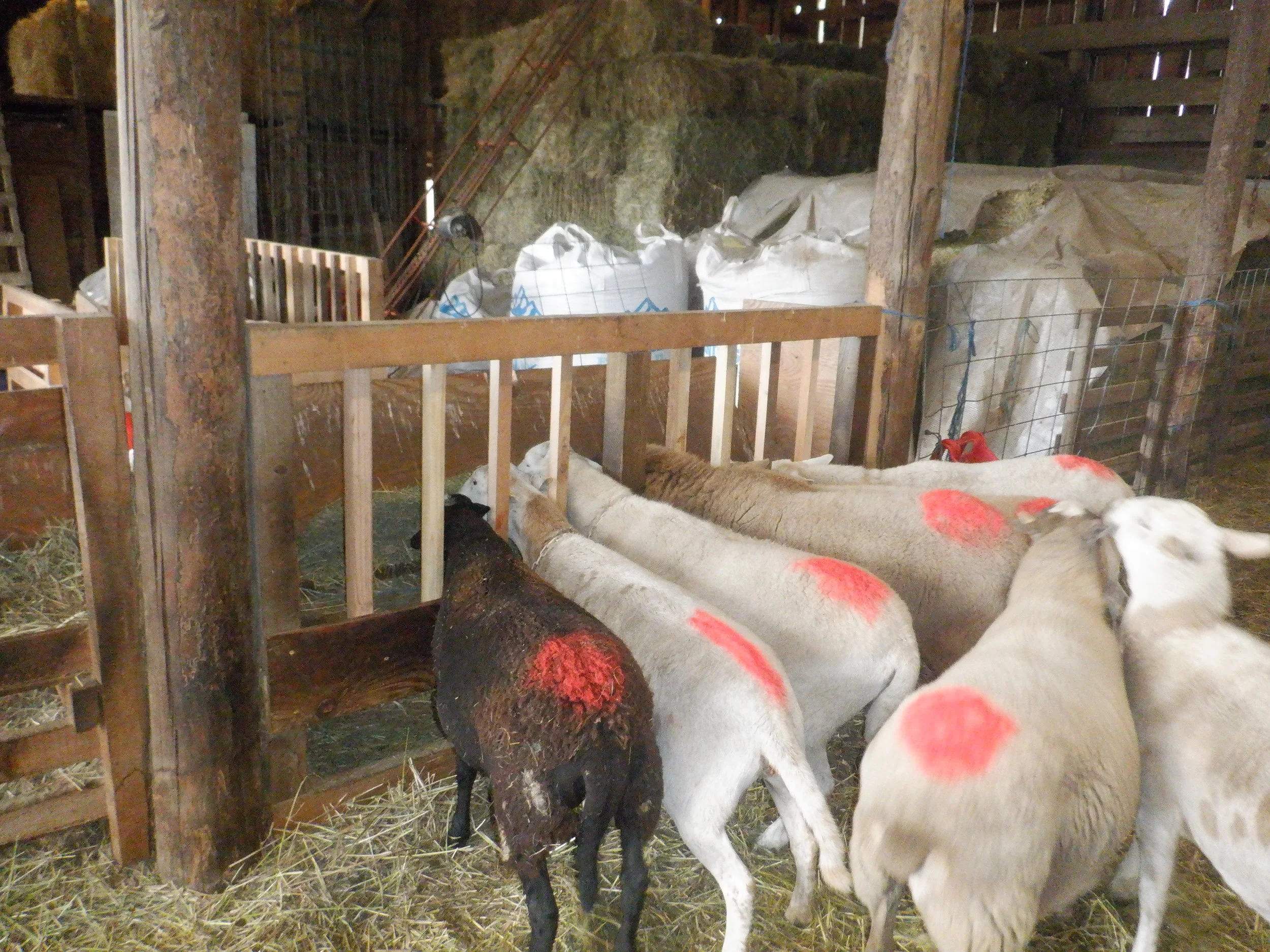
We start our breeding on the 1st of October each year. Breeding takes into account quite a bit of explaining outside the act itself. First off, the 1st of October begins the seasonal clock for us. Most of the adult ewe will be covered (bred) in the first four weeks, fast forward 5 ½ months to birth, and you are now late February into March. This means you are birthing in winter up here as described above, so you should have an idea about protecting your animals or moving the breeding date later. Once the lambs are on the ground, they will spend two months nursing from mom and exploring additional food she is eating, bringing you to late May when we have pastures becoming available to feed them better. Beginning back in September, we flush our ewes with higher protein feed like Alfalfa. This process increases their overall health, which in turn, will determine the number of eggs released as well as the fertility. We don’t practice In-Line Breeding, so each family group we have is normally two to three Rams. One ram will breed the older ewes, the next will breed any of their ewe lambs we’ve kept, and so on. We can have as many as 13 paddocks with ewes and rams breeding each year. As a Ram ages out of our breeding pool, the younger rams move up and assume the duties. This is a very serious situation for us because of the standards we’ve set for ourselves. The wrong ram will have lasting effects felt for years in our flock. Breeding will carry on for two heat cycles to insure maximum participation. One of our standards directly deals with open ewes after two months.
Once bred, the Ram can stay with the ewe’s if desired, however we’ve found that having a bachelor herd works better for us. At a minimum, you would want to move the ram out before any ewe is 30 days past parturition or you risk her being bred back. This also applies to moving ram-lambs out before they are 80 days old, it’s not unheard of having a ram lamb breeding its mother or sibling. In a case of running the ram and ewes together full time, the ram will breed-back the ewes and begin the cycle all over again. Katahdin’s can have three pregnancies in two years with the right nutrition. Our management plan and market don’t make this easy with our long winters and limited pastures, so we stick to spring lambing only. I believe if we lived someplace with a shorter winter, or green pastures most of the year, we would practice an accelerated breeding program. In this case, you are moving the lambs out at 60 days to allow the ewes to regain conditioning prior to the next lambing. Another thought on removing the rams is when we begin to feed the higher protein alfalfa to the ewes. Alfalfa normally costs more money per ton and quite frankly, the rams don’t need it. We weigh our animals twice a year, December is a good time to get hands on the ewes, get a weight to determine if they are pregnant or not, trim hooves and determine overall health and problems. We historically see approximately a 20-pound increase from the summer weight to winter weight in pregnant ewes.
When January rolls around, it’s time to start increasing the protein intake for lamb development. This is a fine line, you want to make sure the lamb is healthy, but you don’t want oversize lambs that can’t be delivered naturally. By the end of February, we are starting to see the first lambs born. We document birth date, birth weight, type of birth (i.e. twins, triplets, ect), parentage, and identifying marks. Each lamb gets an identification and a collar; then placed into a jug for that bonding time. If your flock is small enough, lambing without separating the newborns or moving to a ‘five and ten’ may not be needed. For us, we’ve found it difficult sometimes for a lamb to find mom when there are 60 ewe’s and 120 lambs running around. During this time, the lambs receive our only vaccination CDT. The C and D is explained as enterotoxemia, or overeating disease type C and D, and is caused by the bacterium Clostridium Perfringens characterized by sudden death in a flock. The T is Clostridium Tetani or tetanus. Tetanus is a common and fatal disease characterized by muscle stiffness and spasms, bloat, panic, uncoordinated walking, and/or the inability to eat and drink. Death is inevitable usually about three to fours days after symptoms appear.
Weaning the lambs off momma occurs after two months, once they are on solid foods. Some ewes will let lambs nurse forever if you let them, but at some point, you’ll likely need it to stop so the ewe can gain weight and be ready for the next lambing season. In accelerated lambing situations, you would want the ewe pregnant at 30 days post parturition and the lamb weaned at two months to facilitate another batch of healthy lambs. We wean off animals that will be sold, but normally allow retained ewe lambs to stay with momma until she kicks them off, or we get close to breeding and need to put weight back on the momma. During the onset of breeding, we will also look at the overall health of our flock. This includes their BCS (Body Condition Score). If you look up BCS in sheep, they have a 1 through 5 with pictures. We compare this to our flock and take action to correct any deficient ewes.
That is a fairly roundabout year for us, the only other advice I would have for people new to breeding is familiarize yourself with birthing issues and how to correct them, this is another paper all together! We try to be available for every birth, which in our case means visiting the barn every two hours from about 4 am to midnight, looking over all the ewes to determine if anyone is in labor and watching through the process to insure everything goes right. Most of the time we are just recording the data and celebrating, but when labor goes wrong, it normally goes horribly wrong.
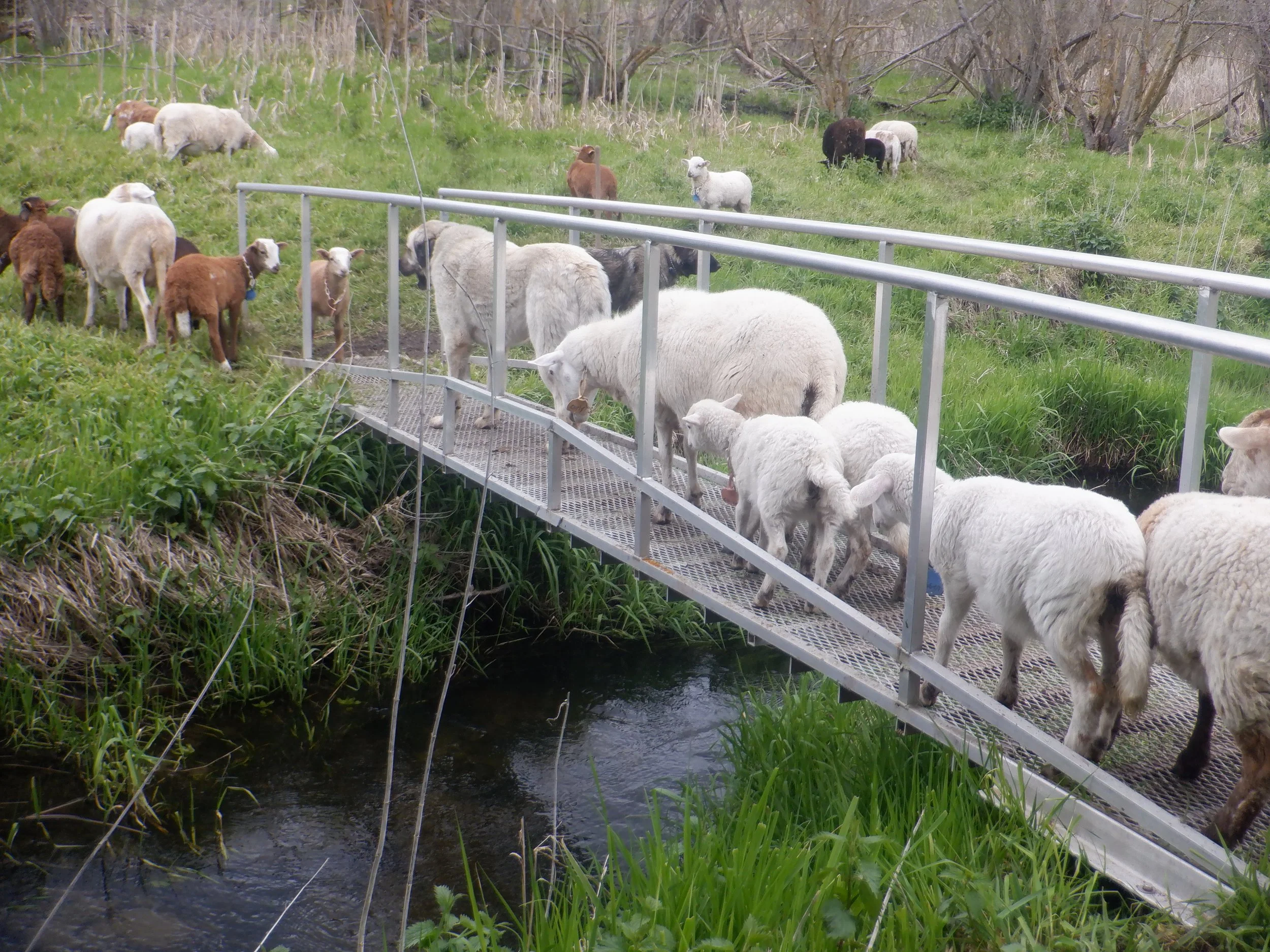
Cross Creek Titan and Sekira bring the sheep back to the barn on a spring day.